



Major Changes in Social Media Platforms
Introduction
Social media has become an essential part of everyday life. From staying connected with friends and family to discovering new products and building businesses, social platforms influence how people communicate and consume information. Over the past few years, the digital landscape has evolved rapidly, leading to significant transformations across major social networks.
Understanding the Major Changes in Social Media Platforms is important for both casual users and professionals. These changes affect content visibility, user engagement, privacy settings, advertising strategies, and overall online experiences. Whether you are a content creator, marketer, entrepreneur, student, or everyday user, staying informed can help you make better decisions and adapt to changing trends.
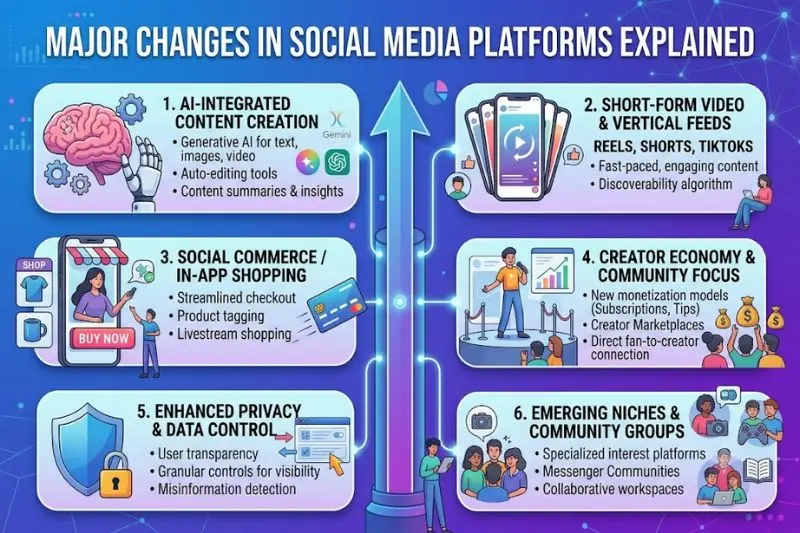
Many social media platforms are now prioritizing short-form videos, personalized feeds, creator-focused tools, artificial intelligence features, and enhanced privacy controls. At the same time, user expectations continue to shift, forcing platforms to innovate and compete for attention.
The Major Changes in Social Media Platforms have also created new opportunities for businesses to reach audiences in more effective ways. However, they have introduced challenges such as increased competition, algorithm changes, and concerns about misinformation and data privacy.
This guide explains the most important developments shaping social media today. You will learn what these changes are, why they matter, how they affect users and businesses, and what steps you can take to stay ahead in the evolving digital world.
What is Major Changes in Social Media Platforms?
The term Major Changes in Social Media Platforms refers to significant updates, transformations, and new features introduced by social networking services that affect how people interact, share content, and engage online.
These changes can include:
- Algorithm updates
- Privacy enhancements
- Content format innovations
- Monetization tools
- Creator economy features
- Advertising improvements
- Artificial intelligence integration
- User experience redesigns
- Community management tools
- Security enhancements
Social media platforms continuously evolve to meet changing user preferences and technological advancements. What worked five years ago may no longer be effective today.
For example, many platforms previously focused on text and image sharing. Today, short-form video content dominates user engagement. Similarly, chronological feeds have largely been replaced by algorithm-driven recommendations.
Understanding the Major Changes in Social Media Platforms helps users and businesses adapt to emerging trends and maximize opportunities for growth and engagement.
Why is Major Changes in Social Media Platforms Important?
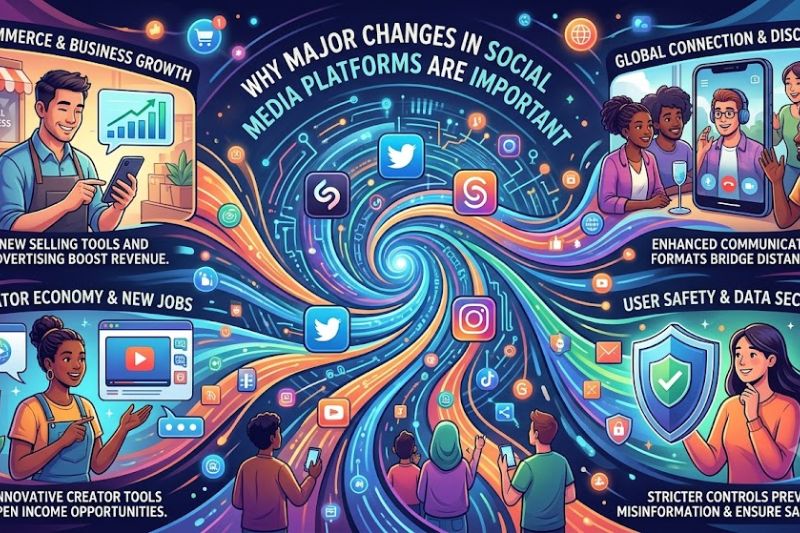
Social media influences communication, entertainment, education, marketing, and business growth. Therefore, understanding platform changes is essential.
Improved Audience Reach
New algorithms determine how content is distributed. Understanding these systems helps creators and businesses reach more people.
Better Marketing Results
Businesses can refine their strategies based on updated advertising tools and audience targeting options.
Enhanced User Experience
Platform improvements often make navigation, content discovery, and interaction more enjoyable.
Stronger Privacy Controls
Many updates focus on giving users greater control over personal information.
Increased Monetization Opportunities
Content creators can access new ways to earn revenue through platform-supported programs.
Competitive Advantage
Those who adapt quickly often outperform competitors who continue using outdated strategies.
Detailed Step-by-Step Guide
Step 1: Understand Algorithm Changes
Algorithms determine which content appears in users’ feeds.
Modern social media algorithms analyze:
- User interests
- Engagement patterns
- Viewing behavior
- Content relevance
- Interaction history
Platforms increasingly prioritize content that keeps users engaged for longer periods.
For example, videos with strong watch time often receive greater visibility than content with only high view counts.
Step 2: Adapt to the Rise of Short-Form Video
One of the biggest Major Changes in Social Media Platforms is the dominance of short-form video content.
Popular characteristics include:
- Quick consumption
- High engagement
- Mobile-friendly viewing
- Easy sharing
- Strong discovery potential
Businesses and creators who embrace short videos often experience better audience growth.
Educational tips, product demonstrations, and behind-the-scenes content perform particularly well.
Step 3: Focus on Authentic Content
Users increasingly prefer authentic and relatable content.
Instead of heavily polished posts, audiences respond positively to:
- Real experiences
- Honest opinions
- Personal stories
- Educational insights
- Community interactions
Authenticity helps build trust and long-term engagement.
Step 4: Learn About Creator Economy Features
Social media platforms now offer various monetization opportunities.
Examples include:
- Subscription programs
- Virtual gifts
- Creator funds
- Affiliate marketing tools
- Brand partnership features
These tools enable creators to generate income directly through their content and audience relationships.
Step 5: Prioritize Community Building
Modern social media success goes beyond follower counts.
Communities create stronger engagement through:
- Meaningful discussions
- User-generated content
- Interactive events
- Live sessions
- Group participation
Building a loyal audience often produces better results than focusing solely on rapid growth.
Step 6: Understand Privacy and Security Updates
Privacy remains a significant concern for users worldwide.
Recent changes focus on:
- Data protection
- Permission controls
- Content moderation
- Account security
- Transparency measures
Users should regularly review account settings to maintain desired privacy levels.
Step 7: Utilize Artificial Intelligence Features
Artificial intelligence is increasingly integrated into social media experiences.
Applications include:
- Content recommendations
- Automated moderation
- Advertising optimization
- Content creation assistance
- Customer service support
Understanding these features helps users improve efficiency and engagement.
Step 8: Optimize for Mobile Experiences
Most social media activity occurs on mobile devices.
Successful content should:
- Load quickly
- Display properly on small screens
- Use readable text
- Include engaging visuals
- Maintain simple navigation
Mobile optimization significantly improves user experiences.
Step 9: Monitor Analytics
Analytics provide valuable insights into audience behavior.
Key metrics include:
- Reach
- Engagement
- Watch time
- Click-through rates
- Conversion rates
Regular monitoring helps identify successful strategies and areas for improvement.
Step 10: Stay Updated with Emerging Trends
The social media landscape changes rapidly.
Effective ways to stay informed include:
- Following industry news
- Testing new features
- Studying audience behavior
- Monitoring competitors
- Reviewing platform announcements
Continuous learning helps maintain relevance and competitiveness.
Benefits of Major Changes in Social Media Platforms
The evolution of social media platforms offers several advantages.
- Better content discovery
- Enhanced user experiences
- Greater personalization
- Improved advertising effectiveness
- More creator monetization options
- Increased audience engagement
- Advanced analytics tools
- Stronger privacy protections
- Better security measures
- Expanded business opportunities
- Faster communication
- Improved customer support channels
- Enhanced community building
- More innovative content formats
- Greater accessibility features
These benefits contribute to a more dynamic and effective social media environment.
Disadvantages / Risks
Despite numerous advantages, certain challenges exist.
- Constant algorithm changes
- Increased competition
- Reduced organic reach in some cases
- Privacy concerns
- Information overload
- Misinformation risks
- Content saturation
- Dependence on platform policies
- Increased pressure on creators
- Mental health concerns
- Cybersecurity threats
- Audience fragmentation
Understanding these risks helps users develop more balanced and sustainable strategies.
Common Mistakes to Avoid
Many individuals and businesses struggle because they fail to adapt to platform changes effectively.
Ignoring Algorithm Updates
Algorithms influence visibility significantly.
Failing to understand changes can reduce engagement and reach.
Posting Without a Strategy
Random posting rarely produces consistent results.
Developing a content plan improves performance and audience retention.
Overlooking Analytics
Analytics reveal what works and what does not.
Ignoring data often leads to missed opportunities.
Focusing Only on Follower Counts
Large audiences do not always translate into meaningful engagement.
Quality interactions often matter more than raw numbers.
Neglecting Community Engagement
Responding to comments and messages helps strengthen audience relationships.
Engagement encourages loyalty and trust.
Using Outdated Content Formats
Content preferences evolve constantly.
Failing to adapt can reduce visibility and relevance.
Ignoring Privacy Settings
Users should regularly review account security and privacy controls to protect personal information.
Why are social media platforms changing so frequently?
Social media platforms evolve to meet user expectations, improve engagement, address security concerns, and remain competitive in a rapidly changing digital environment.
How do algorithm updates affect content visibility?
Algorithms determine which content appears in user feeds. Updates can increase or decrease visibility depending on factors such as engagement, relevance, and user behavior.
Why is short-form video becoming so popular?
Short-form videos are easy to consume, highly engaging, and well-suited for mobile users. They allow creators to deliver information quickly and effectively.
How can businesses adapt to social media changes?
Businesses should monitor trends, analyze performance data, experiment with new content formats, and focus on providing value to their audiences.
Are privacy updates beneficial for users?
Yes. Privacy updates often provide greater control over personal information, helping users manage data sharing and online security more effectively.
What role does artificial intelligence play in social media?
Artificial intelligence helps personalize content recommendations, improve advertising performance, moderate content, and enhance user experiences.
Is organic reach still important?
Organic reach remains valuable because it helps build authentic relationships with audiences without relying entirely on paid advertising.
How often should users review their social media strategies?
Regular reviews are recommended. Monthly or quarterly evaluations help identify trends, measure performance, and improve results.
Expert Tips & Bonus Points
To make the most of the Major Changes in Social Media Platforms, consider these practical recommendations.
Focus on Value First
Content that educates, entertains, or solves problems consistently performs better than promotional content alone.
Diversify Content Formats
Use a mix of:
- Videos
- Images
- Stories
- Live sessions
- Informative posts
Diverse formats help reach different audience segments.
Build an Owned Audience
While social media is valuable, collecting email subscribers and building direct customer relationships reduces dependence on platform changes.
Stay Consistent
Consistency often matters more than perfection.
Regular posting helps maintain audience engagement and visibility.
Experiment Frequently
Testing new features and content styles helps identify growth opportunities before competitors.
Strengthen Brand Identity
A recognizable voice, visual style, and message help differentiate content in crowded feeds.
Invest in Community Building
Meaningful relationships create loyal audiences that remain engaged despite algorithm shifts.
Prioritize Quality Over Quantity
Publishing fewer high-quality posts often produces better results than posting frequently without clear value.
Monitor Emerging Technologies
New technologies frequently influence social media development.
Remaining informed provides a strategic advantage.
Think Long-Term
Successful social media growth requires patience, adaptability, and a commitment to continuous improvement.
Conclusion
The Major Changes in Social Media Platforms continue to reshape how people communicate, consume content, and build online communities. From algorithm-driven feeds and short-form video dominance to enhanced privacy controls and creator-focused monetization tools, social networks are evolving faster than ever before.
For users, these changes create more personalized and engaging experiences. For businesses and content creators, they present both opportunities and challenges. Success now depends on understanding audience behavior, adapting to platform updates, and focusing on authentic engagement rather than relying on outdated tactics.
While constant changes can sometimes feel overwhelming, they also open doors to innovation and growth. Those who remain flexible, continue learning, and embrace new features are more likely to achieve long-term success. Monitoring trends, reviewing analytics, and experimenting with different content formats can help individuals and organizations stay competitive in an increasingly crowded digital landscape.
The most important lesson is that social media is no longer just about posting content. It is about building relationships, creating value, and fostering communities. By understanding the Major Changes in Social Media Platforms, users can make smarter decisions, improve their online presence, and take full advantage of the opportunities available in today’s digital world.
As technology continues to advance, social media platforms will keep evolving. Staying informed and adaptable will remain the key to thriving in this ever-changing environment.
